Why Asian Citrus Psyllid Matters

Asian citrus psyllid spreads citrus greening disease, posing a serious threat to citrus trees and the growing Georgia citrus industry. Early monitoring is critical for effective management.

Asian citrus psyllid (ACP) is the most serious insect pest of citrus around the world. It vectors the phloem-restricted bacteria Candidatus Liberibacter asiaticus, a pathogen of serious disease of citrus called citrus greening or Huanglongbing (HLB). Once infected, the bacteria gradually spread within the tree and ultimately kill it. Therefore, detection of Asian citrus psyllid in citrus trees are very critical to limit spread of this insect to citrus production areas.

Current Psyllid Presence in Georgia

Inspect citrus plants regularly and join statewide monitoring efforts.

So far, the Asian Citrus Psyllid has been detected mostly in homeowners’ trees in coastal counties in addition to very few commercial groves. Counties closer to Florida line are likely to be more impacted first due to somewhat favorable weather conditions and the proximity. Hence, citrus growers and owners of residential citrus in these and neighboring counties are advised to check their citrus trees for ACP and join the efforts in containing this insect.

Psyllid Identification

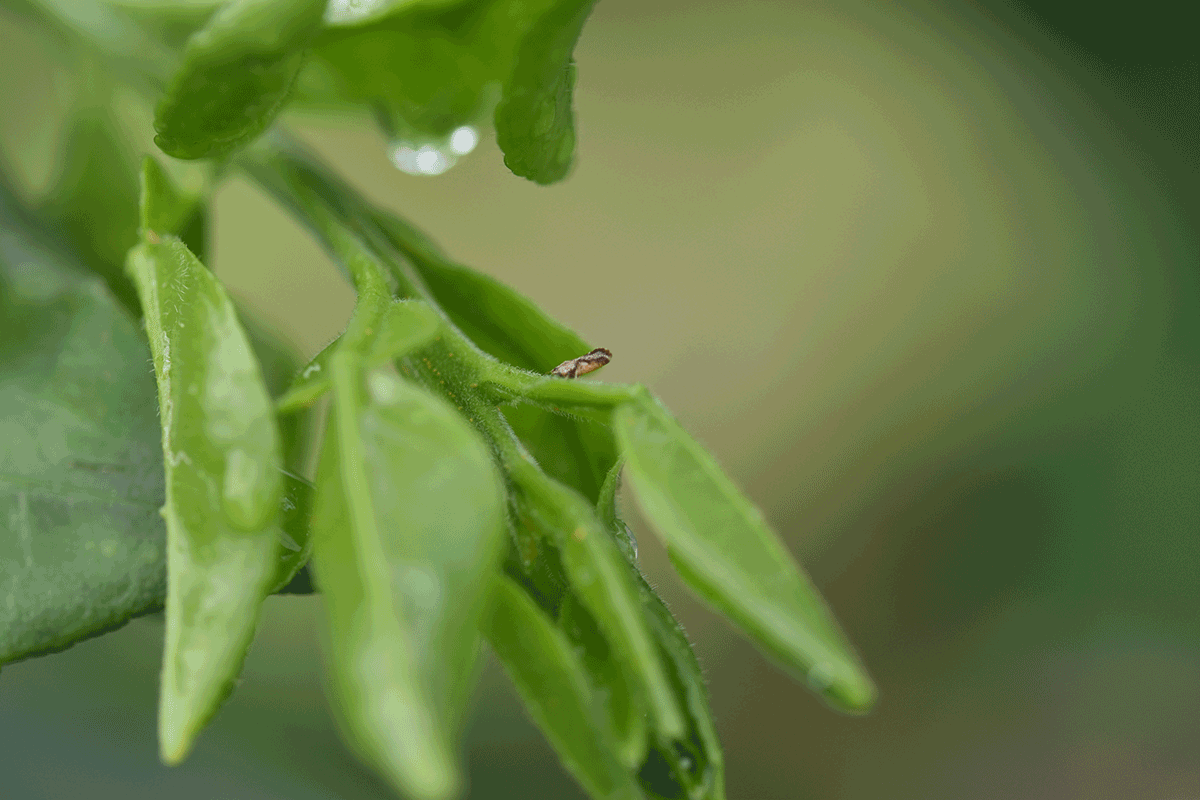
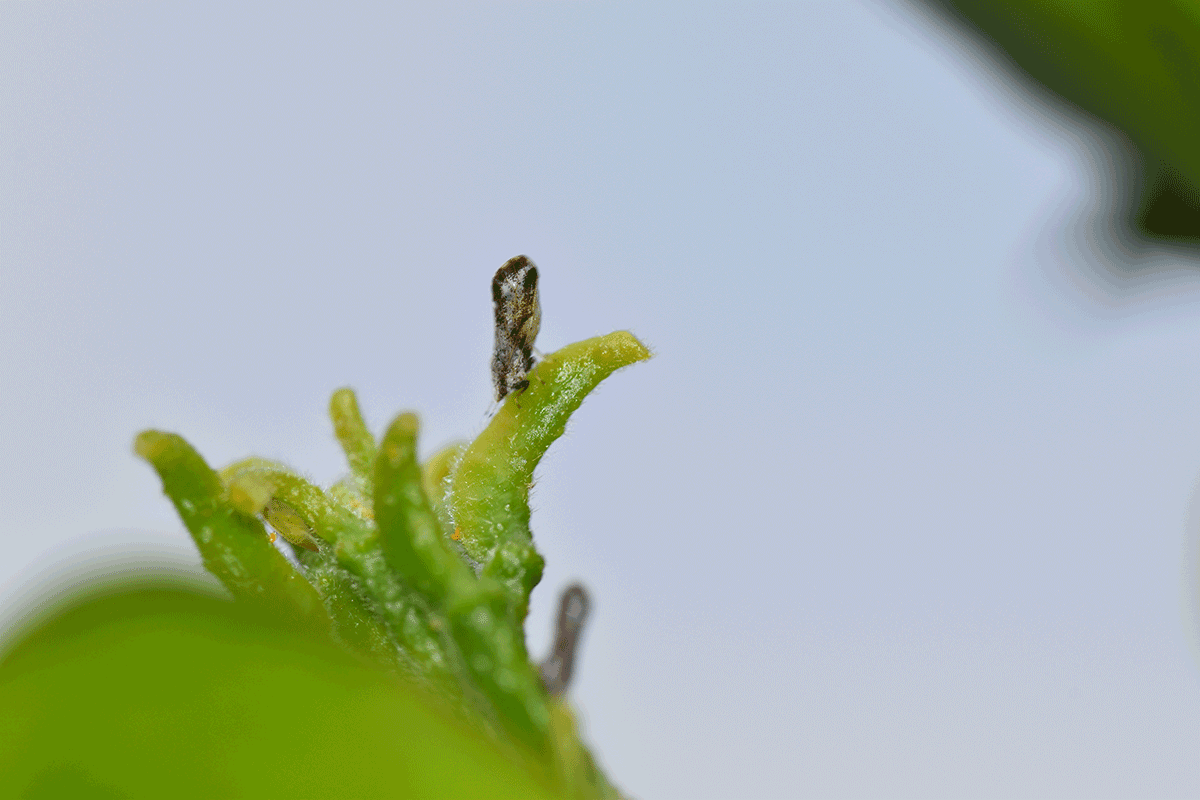
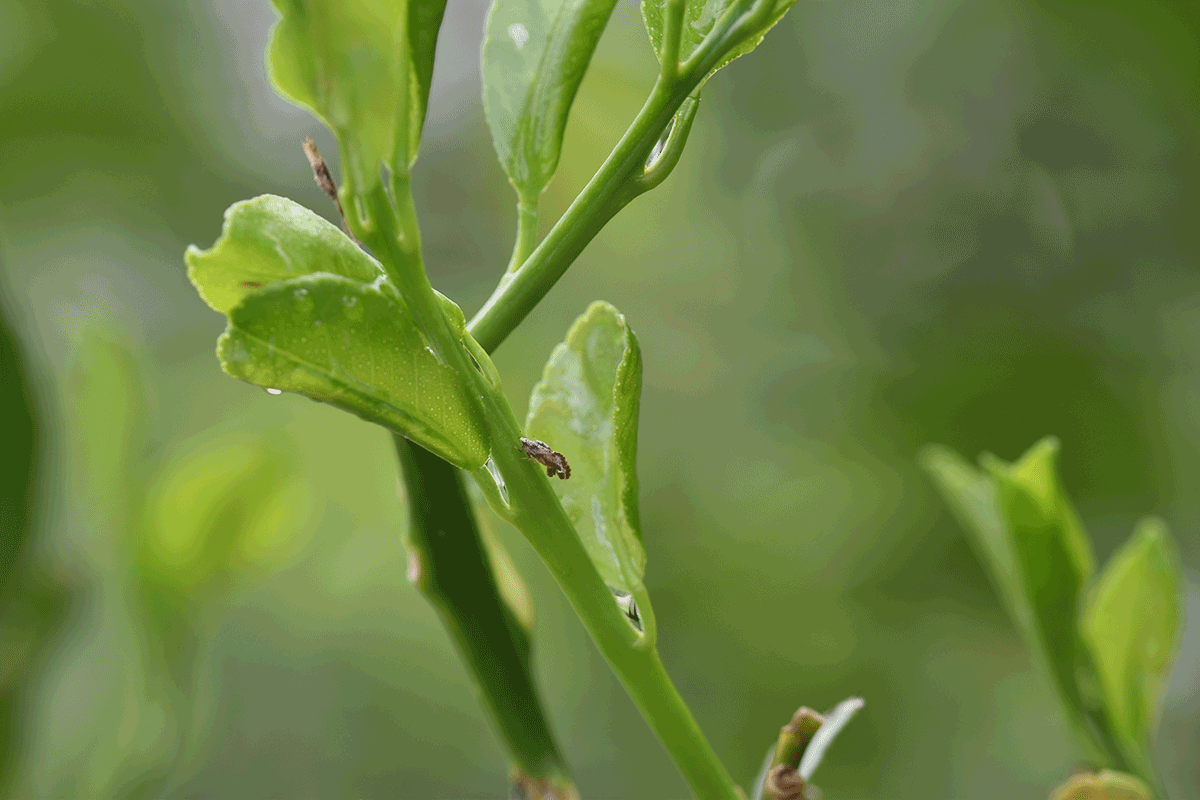
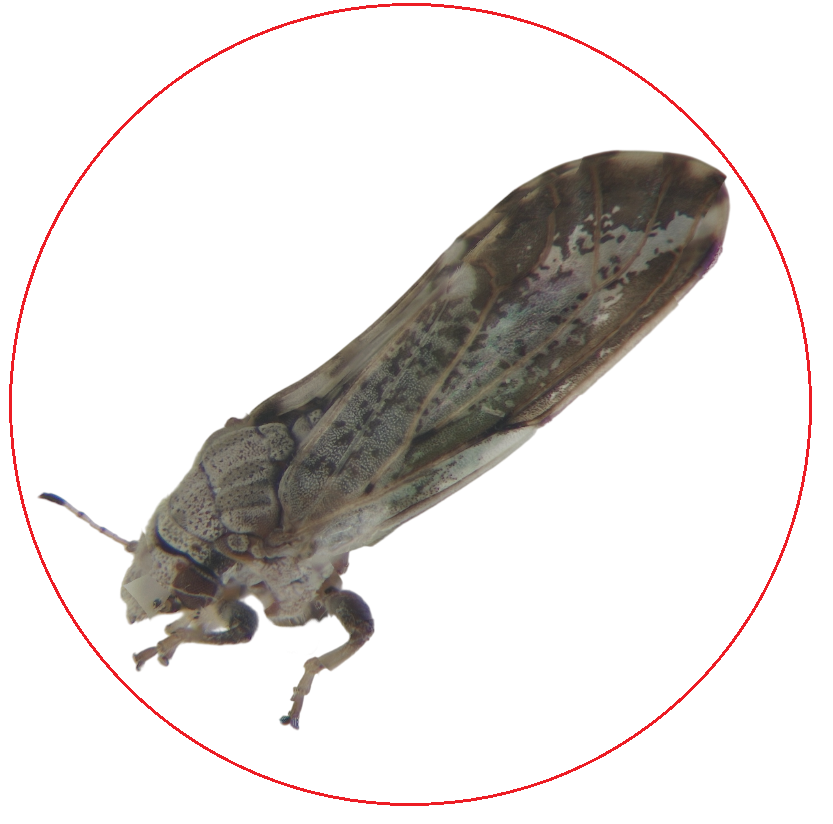
The adult citrus psylla is a tiny, mottled brown insect (3-4 mm long) with wings positioned in a roof-like manner over its body at a 45-degree angle due to its unique feeding behavior. The adults are often found gathered on the stems and leaves of new growth. They easily jump away or hide on the underside of a leaf when disturbed.

Both adults and nymphs produce waxy secretions and honeydew while feeding on plant sap.

Nymphs often cluster on stems.

The lifecyle of Asian citrus psyllid has three stages.